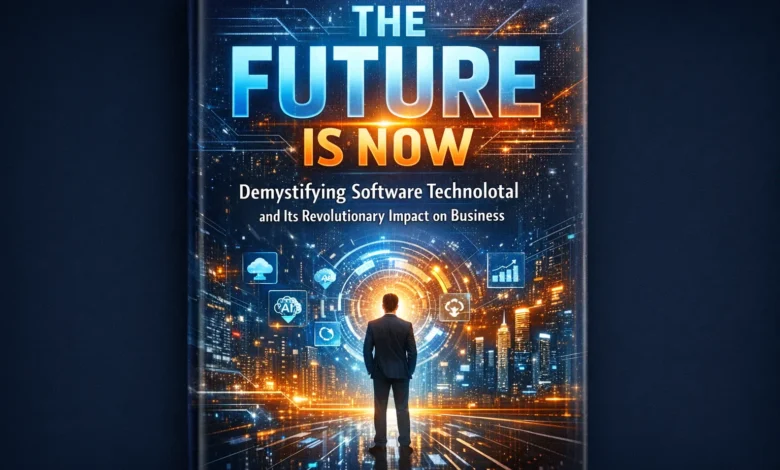
Decoding Software Technolotal: The New Digital Fabric of Business
The digital landscape is no longer a static ecosystem of isolated applications and hardware. It has evolved into a dynamic, intelligent, and deeply interconnected organism, pulsating with data and automated processes. This profound shift is driven by a transformative convergence—a new paradigm we term software technolotal. This concept represents more than just the latest buzzword; it is the foundational framework for modern enterprise innovation and resilience. At its core, software technolotal describes the holistic integration of advanced software methodologies, cutting-edge technological platforms, and strategic business logic into a seamless, self-optimizing digital fabric. It is where artificial intelligence, cloud-native architectures, decentralized systems, and immersive interfaces cease to be standalone innovations and instead become interwoven threads in a single, powerful tapestry. This article serves as your comprehensive guide to understanding this critical evolution, exploring its components, strategic imperatives, and the future it is actively constructing. We will move beyond theory to examine the tangible impact of this integrated approach on competitive advantage, operational agility, and the very nature of value creation in the 21st century.
Defining the Core Pillars of Modern Software Technolotal
To grasp the essence of software technolotal, one must first dissect its fundamental components. This is not a single tool but a strategic architecture built upon several interdependent pillars. These pillars work in concert to create systems that are not merely functional but are adaptive, intelligent, and inherently scalable. The first pillar is the shift to cloud-native and edge computing paradigms. This represents the move from monolithic software hosted on-premises to applications designed as microservices, running in containers, and orchestrated across distributed environments. This approach provides unparalleled elasticity and resilience, allowing systems to scale dynamically with demand.
The second foundational pillar is the pervasive infusion of artificial intelligence and machine learning. In the context of software technolotal, AI is not an add-on feature but the central nervous system. It enables predictive analytics, autonomous decision-making, natural language processing, and computer vision to be deeply embedded into workflows. This transforms software from a tool that executes commands to a partner that recommends actions, anticipates failures, and personalizes user experiences at scale. Together, these pillars form the bedrock upon which modern digital ecosystems are built.
The Strategic Business Value and Competitive Imperative
Adopting a software technolotal framework is no longer optional for enterprises seeking market leadership; it is a strategic imperative for survival and growth. The primary value proposition lies in its ability to unlock unprecedented operational agility and accelerate time-to-value. By leveraging integrated DevOps practices, continuous integration/continuous deployment (CI/CD) pipelines, and infrastructure-as-code, organizations can move from quarterly release cycles to daily or even hourly updates. This rapid iteration capability allows businesses to respond to market shifts, customer feedback, and competitive threats with remarkable speed, turning software development into a core competitive weapon.
Furthermore, this holistic approach drives profound efficiency gains and enables new revenue streams. Intelligent automation of routine tasks frees human talent for higher-value strategic work, while data-driven insights derived from integrated systems lead to better decision-making. Perhaps most importantly, a mature software technolotal strategy allows companies to create deeply personalized customer experiences and innovate business models. From subscription-based services powered by usage analytics to entirely new digital products, the convergence of these technologies becomes the engine for disruptive innovation, directly impacting the bottom line and securing long-term market relevance.
Architectural Evolution: From Monoliths to Cognitive Mesh
The architectural journey underpinning software technolotal is a dramatic evolution from rigid, centralized systems to fluid, intelligent networks. The past decade witnessed the essential move from monolithic applications to service-oriented architecture (SOA) and then to microservices. This decomposition allowed for independent scaling and development. However, the current frontier extends beyond microservices to what industry leaders are calling a “cognitive mesh” or “composable architecture.” In this model, business capabilities are broken down into autonomous, API-driven packages that can be dynamically discovered, assembled, and reused across the organization. This creates a truly agile environment where new products can be built by orchestrating existing capabilities rather than coding from scratch.
This architectural shift is empowered by ubiquitous APIs, event-driven communication, and service meshes that manage the complex interactions between these distributed components. The result is a system that is inherently resilient—if one service fails, others can often continue operating—and massively scalable. The architecture itself becomes a platform for innovation, reducing the cost and complexity of experimentation. This evolution is critical for supporting the real-time, data-intensive applications that define modern customer expectations, from instant financial transactions to personalized streaming recommendations.
The Central Role of Data and Intelligence
In the paradigm of software technolotal, data is the universal currency and intelligence is the mechanism of exchange. The integration layer between advanced software systems and modern technology platforms is fundamentally a data fabric. This fabric unifies data ingestion, storage, processing, and analysis across on-premises data centers, multiple cloud providers, and edge devices. It ensures that clean, contextual, and secure data is available in real-time to any application or analytics engine that requires it, breaking down the traditional silos that have long hampered enterprise insight. A robust data strategy is, therefore, not a supporting act but the lead protagonist in any successful technolotal initiative.
Minecraft PlugboxLinux: The Definitive Guide to Running, Managing, and Optimizing Minecraft Servers on Linux
The true transformation occurs when this unified data stream is processed by embedded AI/ML models. This is where data becomes operational intelligence. Machine learning algorithms can detect subtle patterns in user behavior, predict equipment failures before they happen, optimize logistics routes in real-time, and automate complex regulatory compliance checks. As Andrew Ng, a global leader in AI, aptly stated: “Just as electricity transformed almost everything 100 years ago, today I actually have a hard time thinking of an industry that I don’t think AI will transform in the next several years.” This sentiment captures the essence of intelligence within software technolotal—it is the transformative force that turns reactive systems into proactive partners.
Security and Governance in an Interconnected World
The immense power of interconnected software technolotal systems introduces equally significant challenges in security and governance. Traditional perimeter-based security models, akin to building a castle wall, are obsolete in a world where applications, data, and users are everywhere. The new model requires a “zero trust” architecture, which operates on the principle of “never trust, always verify.” Every access request, whether from inside or outside the corporate network, must be authenticated, authorized, and encrypted. Security must be “shifted left” into the development lifecycle (DevSecOps) and baked into the very design of each microservice and API, ensuring that protection is inherent, not an afterthought.
Governance, too, must evolve from a centralized, restrictive function to a distributed, enabling framework. With the pace of change and the autonomy of development teams, governance needs to focus on providing guardrails and policies-as-code rather than manual approvals. This includes managing compliance with regulations like GDPR or CCPA, enforcing ethical AI guidelines, and maintaining visibility into the software supply chain to avoid vulnerabilities from open-source dependencies. Effective governance in this new era ensures that the agility of software technolotal does not come at the cost of security, compliance, or ethical responsibility.
Human-Centric Design and Experience
A critical, yet sometimes overlooked, pillar of successful software technolotal is its relentless focus on human-centric design. The most powerful technological convergence is meaningless if it results in complex, intimidating, or inefficient user experiences. Therefore, the principles of UX (User Experience) and CX (Customer Experience) design must be integrated from the earliest stages of development. This involves creating intuitive interfaces for both external customers and internal employees, ensuring that the power of the underlying systems is accessible and actionable. The goal is to create technology that adapts to human behavior, not the other way around.
This human focus extends to the development process itself. Low-code/no-code platforms, which are a key manifestation of advanced software technolotal, democratize application creation by allowing “citizen developers” (business analysts, process experts) to build solutions with visual tools. This bridges the gap between business needs and IT delivery, accelerating innovation. Furthermore, empathetic design considers the broader societal impact, aiming to create inclusive, accessible, and ethically sound applications. By placing human experience at the center, organizations ensure their technological investments drive genuine adoption, satisfaction, and value.
Key Technologies Converging Under the Technolotal Umbrella
The software technolotal framework is energized by the rapid maturation and convergence of several specific, high-impact technologies. Understanding this landscape is key to strategic investment. Beyond the foundational cloud and AI, several other forces are critical. The Internet of Things (IoT) and edge computing bring computational power and data collection to the physical world, from factory floors to retail shelves, feeding real-time data into central systems. Blockchain and distributed ledger technology offer new models for trust, transparency, and automation in transactions and supply chains. These are not standalone trends but interoperable pieces of a larger puzzle.
Similarly, immersive technologies like Augmented Reality (AR) and Virtual Reality (VR) are evolving from novelty to utility, creating new interfaces for design, training, and customer engagement. Quantum computing, though still emerging, promises to tackle classes of problems (like complex molecular modeling or optimization) that are currently intractable. The following table outlines how these key technologies interact within the software technolotal paradigm:
| Technology | Primary Role in Software Technolotal | Key Business Impact |
|---|---|---|
| Cloud-Native & Hybrid Cloud | Provides the scalable, resilient, and efficient execution environment for distributed applications. | Enables global scale, cost optimization, and rapid provisioning of resources. |
| Artificial Intelligence & ML | Acts as the embedded brain for automation, prediction, and personalization across all software layers. | Drives intelligent automation, data-driven decision-making, and hyper-personalized user experiences. |
| Internet of Things (IoT) & Edge | Extends the software fabric into the physical world, collecting and processing data at the source. | Enables real-time monitoring, predictive maintenance, and new data-driven service models for physical assets. |
| Blockchain & DLT | Provides a secure, transparent, and immutable layer for transactions, identity, and provenance. | Reduces friction and cost in multi-party processes, enhances supply chain transparency, and enables new digital assets. |
| Low-Code/No-Code Platforms | Democratizes development, allowing faster creation of applications by bridging IT and business teams. | Accelerates digital solution delivery, reduces IT backlog, and empowers business-led innovation. |
| AR/VR & Immersive Tech | Creates intuitive, spatial interfaces that blend digital information with the physical or virtual world. | Revolutionizes training, design prototyping, remote collaboration, and customer retail experiences. |
Implementation Challenges and Strategic Pitfalls
While the vision of software technolotal is compelling, the path to its successful implementation is fraught with significant challenges. The foremost hurdle is often cultural and organizational. Moving to this new paradigm requires breaking down long-standing silos between development, operations, security, and business units. It demands a cultural shift towards collaboration, shared responsibility, and continuous learning. Legacy systems, often referred to as “technical debt,” pose another massive barrier. These monolithic, mission-critical applications are difficult to integrate, expensive to maintain, and risky to replace, creating a drag on transformation efforts that can stifle momentum and investment.
From a technical and strategic standpoint, complexity management is a constant battle. The very distributed nature of modern architectures can lead to an overwhelming sprawl of services, tools, and platforms. Without careful governance, this can increase costs and create opacity. Furthermore, a common pitfall is the “technology-first” fallacy—investing in trendy tools without a clear business outcome or a well-defined problem to solve. Success requires starting with business value, cultivating the right talent and skills, and adopting a pragmatic, iterative approach to modernization rather than seeking a risky “big bang” transformation.
The Future Trajectory and Emerging Trends
The trajectory of software technolotal points toward even greater autonomy, contextual awareness, and physical-digital fusion. We are moving towards the era of the “autonomous enterprise,” where AI-driven systems will manage not just individual tasks but entire business processes—from procurement to customer service—with minimal human intervention. These systems will self-optimize, self-heal, and self-configure based on real-time goals and constraints. This shift will redefine the role of human workers, focusing them on strategy, creativity, and overseeing ethical and exceptional cases that fall outside automated norms.
Simultaneously, the next wave will be characterized by hyper-contextual and predictive experiences. Software will increasingly anticipate needs based on a user’s location, history, and even emotional state (via affective computing). The convergence with biotechnology and advancements in brain-computer interfaces hint at a future where the interaction with the digital fabric could become seamless and instinctive. Furthermore, the rise of sovereign AI and specialized, small-scale language models will allow organizations to harness powerful intelligence that is tailored to their specific domain, data, and ethical standards, making the power of AI more accessible and accountable.
Conclusion: Embracing the Integrated Paradigm
The concept of software technolotal is the most accurate lens through which to view and navigate the current digital revolution. It is not a single product to purchase but a strategic mindset to cultivate—a recognition that sustainable competitive advantage now springs from the holistic and intelligent integration of software, platforms, and business logic. This journey demands investment in modern architecture, a data-centric culture, and a workforce skilled in both technological fluency and collaborative problem-solving. The organizations that succeed will be those that view technology not as a cost center but as the core fabric of their being, capable of weaving together innovation, efficiency, and deep human connection.
As we look ahead, the divide between the digital and physical will continue to blur, and the pace of change will only accelerate. Leaders must therefore foster an organizational culture that is agile, curious, and resilient. By understanding and implementing the principles of software technolotal, enterprises can build systems that are not just robust but are alive—continuously learning, adapting, and creating value. The future belongs not to those who merely adopt technology, but to those who can thoughtfully converge it into a coherent, powerful, and responsible whole. The journey is complex, but the imperative is clear: integrate or stagnate.
Frequently Asked Questions (FAQ)
How does software technolotal differ from traditional IT or software development?
Traditional IT often operated in silos, with separate teams for infrastructure, applications, and security, leading to slower, project-based delivery. Software technolotal represents a convergent, holistic approach where development, operations, data science, and business strategy are integrated. It emphasizes continuous delivery, embedded intelligence, and the strategic use of a unified digital fabric to drive business outcomes, making it more agile, proactive, and intrinsically valuable than older models.
What are the first steps an organization should take to adopt a software technolotal strategy?
The first step is always assessment and alignment, not technology procurement. Begin by identifying a clear business problem or opportunity that has high value. Then, assess your current architecture, skills, and culture. Start small with a pilot project that uses cloud-native principles, cross-functional teams (like a DevOps pod), and focuses on measurable outcomes. This iterative approach builds momentum, proves value, and helps evolve the organizational culture that is critical for scaling the software technolotal paradigm across the enterprise.
Is software technolotal only relevant for large tech companies or enterprises?
Absolutely not. While large enterprises may have more resources, the principles of software technolotal—agility, integration, data-driven decision-making—are perhaps even more critical for small and medium-sized businesses (SMBs). Cloud services and SaaS platforms have democratized access to powerful technology. An SMB can leverage integrated CRM, marketing automation, and analytics tools to act with speed and insight that rivals larger competitors. The core idea is strategic integration, which is scalable and applicable to organizations of any size.
How does this concept address growing concerns about data privacy and ethical AI?
A mature software technolotal framework inherently builds governance and ethics into the development lifecycle (a practice called “Ethics by Design”). By treating data governance and ethical guidelines as code—automated policies embedded into the platform—organizations can ensure compliance and ethical use are enforced consistently. This integrated approach allows for better transparency, data lineage tracking, and the ability to audit AI model decisions, which is far more effective than trying to bolt-on ethics and privacy controls after systems are built.
What is the most common mistake companies make when pursuing this transformation?
The most critical mistake is focusing on technology tools over people and processes. Investing in the latest AI platform or cloud service without first cultivating a collaborative culture, upskilling teams, and re-engineering outdated business processes is a recipe for failure. Success in software technolotal is 30% technology and 70% organizational change. Companies must lead with a clear vision, empower their teams with new ways of working, and measure progress based on business outcomes, not just technical deployments.